Diversification in the crypto ecosystem: sectors and weighting
The crypto market consists of very different sectors. Why diversification has its own rules here and weighting is decisive.
Draft for technical and editorial review by CAM Schweiz AG, not yet approved.
The crypto market is often perceived as a uniform asset class. In fact, it consists of very different areas with their own use cases, business models and risks. Anyone wishing to diversify should know these sectors and be aware that diversification in the crypto sector has its own rules.
The most important sectors at a glance
Payments and store of value
The focus here is on transferring and storing value. Bitcoin is the best-known representative. Alongside it, stablecoins are playing a growing role in payments and settlement.
Smart contract platforms
Platforms such as Ethereum form the basis for decentralised applications, from financial services to tokenisation. Their value is closely linked to their use by developers and users.
Oracles
Blockchains cannot themselves retrieve information outside their own network. Oracles supply external data such as prices, interest rates or events so that smart contracts can respond to them. They thus form an important infrastructure layer whose reliability is decisive for many other applications.
Layer 2 solutions
Layer 2 networks process transactions outside the main chain and transfer the results back in bundles. This increases capacity and lowers costs, but brings additional technical complexity.
Tokenisation of real-world assets
In this area, traditional assets such as bonds, fund units or real estate are represented digitally. It connects the blockchain with the traditional financial industry and in many areas is still at the beginning of its development. Uncertainty as to which approaches will prevail in the long term is correspondingly high.
Why correlation matters
One important point is often overlooked: in pronounced market phases, crypto assets often move strongly in lockstep. In corrections, many assets fall at the same time, regardless of sector. Diversification within the crypto market therefore mainly reduces project-specific risks, such as technical errors, competitive disadvantages or regulatory problems of individual projects. The general market risk of the asset class can only be reduced to a limited extent in this way.
Looking at total wealth, the most effective form of diversification is therefore often found outside the crypto market: in combining crypto assets with traditional asset classes such as equities, bonds or real estate. Within the crypto allocation, a deliberate distribution nevertheless remains sensible, because sectors can develop very differently over longer periods and individual projects can fail.
Weighting: more important than sheer numbers
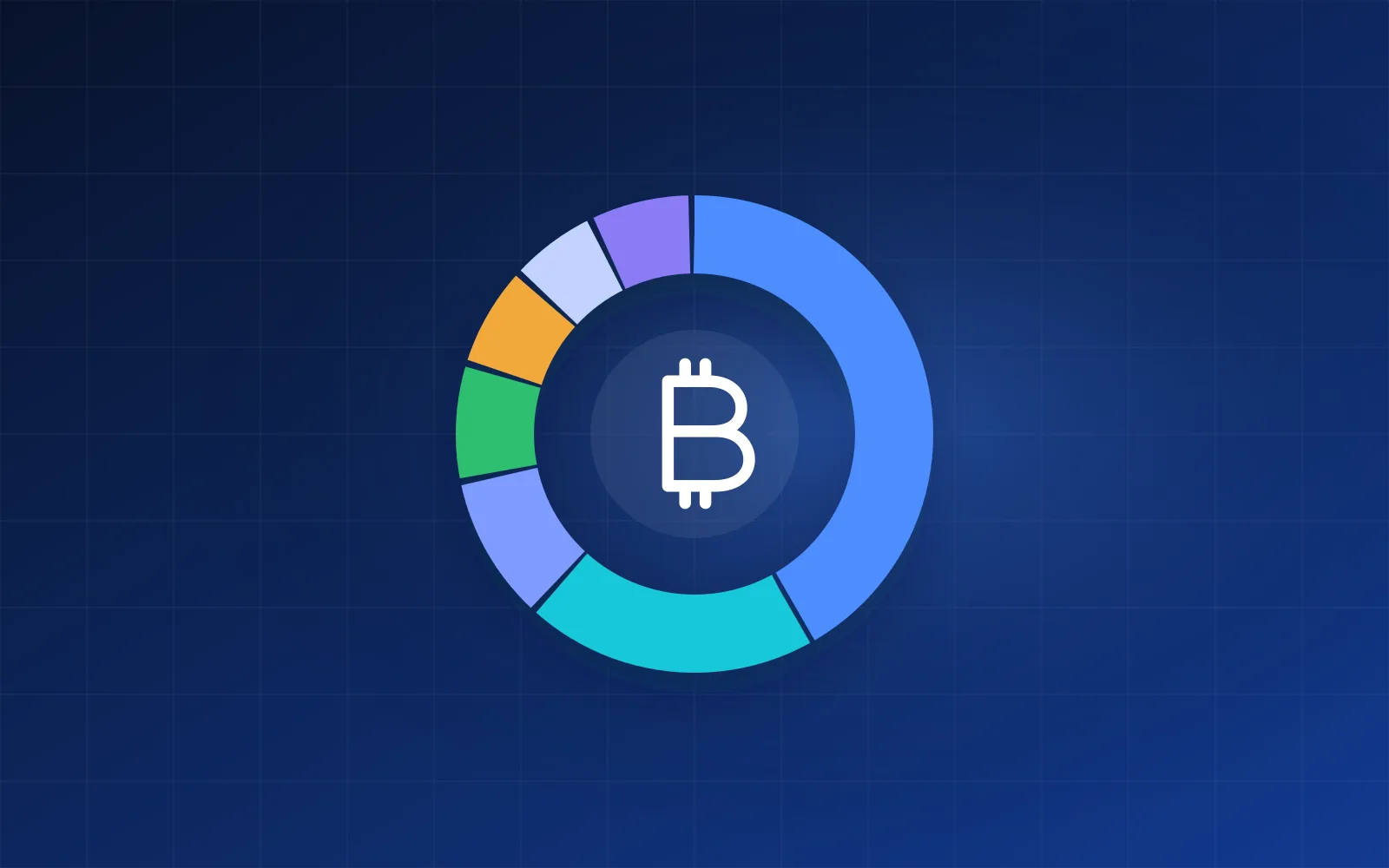
Diversification does not mean holding as many projects as possible. A long list of small positions increases complexity without necessarily reducing risk. What matters is well-considered weighting:
- Core: Established networks with high liquidity and a long history usually form the foundation.
- Complement: Selected sectors are added with smaller weightings, depending on maturity and risk.
- Ranges: Upper and lower limits per position and sector prevent individual assets from dominating the portfolio after strong price rises.
- Liquidity: Positions should remain tradable even in tense market phases.
At CAM Schweiz, the investment committee sets the weightings and reviews them regularly. Aspects such as network activity, liquidity, technological maturity and the regulatory environment are taken into account.
Conclusion
The crypto ecosystem offers different building blocks with their own opportunities and risks. Sensible diversification takes account of sectors, correlations and, above all, weighting. If you would like to know what such a structure could look like for your portfolio, we look forward to a personal initial consultation.
Start the Crypto Portfolio Check
Advertising. This information is provided solely for informational and advertising purposes and constitutes neither an investment recommendation nor an offer. Investments in financial instruments and crypto assets involve risks; a partial or total loss of the capital invested is possible. Past performance is not a reliable indicator of future results. For further information, please see the legal information.