Blockchain and artificial intelligence: a sober assessment
AI and blockchain are often mentioned in the same breath. Where the technologies actually intersect and which questions remain open.
Draft for technical and editorial review by CAM Schweiz AG, not yet approved.
Artificial intelligence and blockchain are among the most widely discussed technologies of our time. Little wonder, then, that their combination is talked about more and more often. However, there is often a big difference between genuine use cases and marketing buzzwords. A sober view helps to distinguish potential from limits.
Two technologies with different strengths
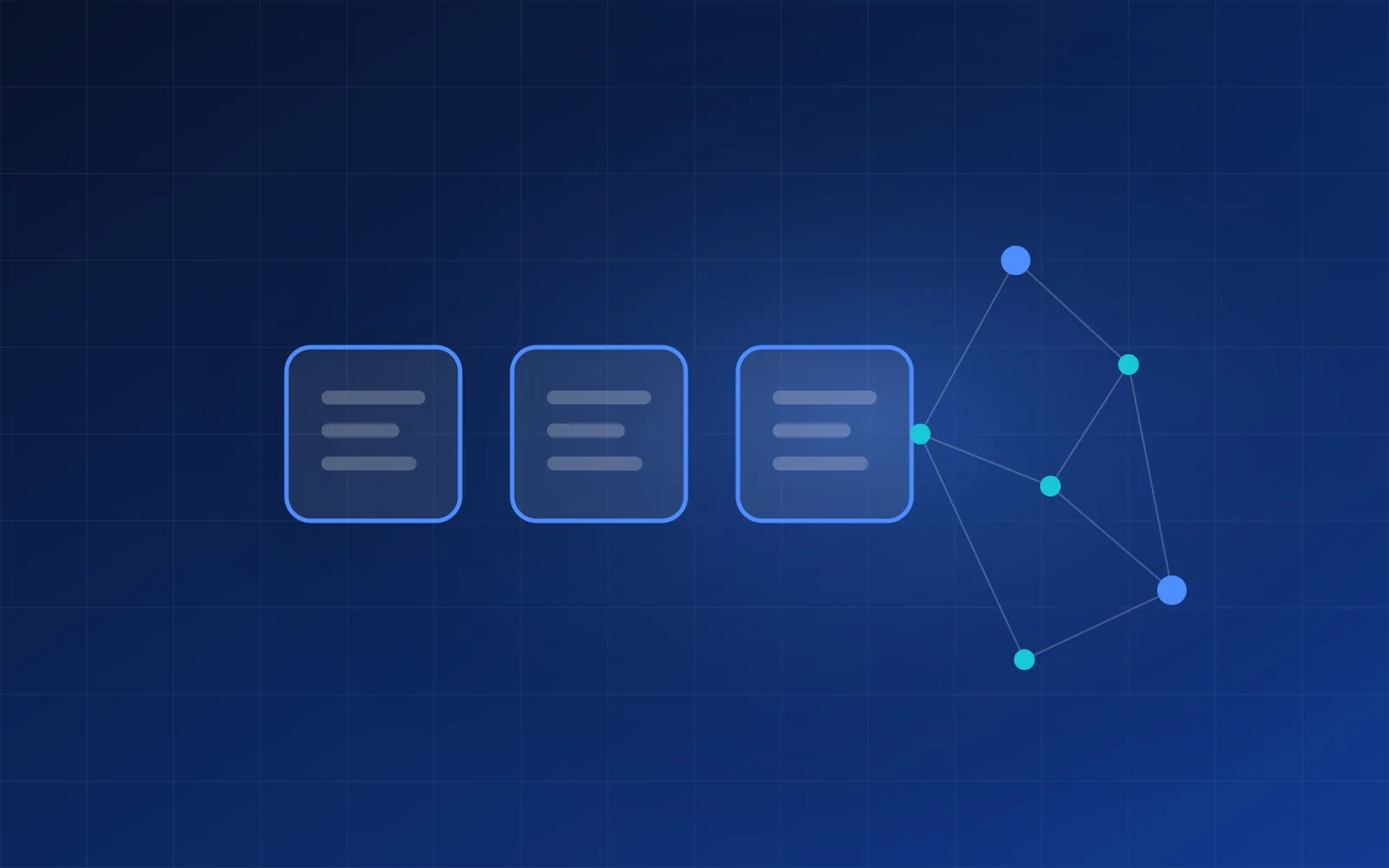
Artificial intelligence is strong at recognising patterns in large volumes of data, generating content and preparing decisions. However, how it works is often difficult to trace, and it usually depends on central data centres. Blockchains, on the other hand, are neither particularly fast nor computationally powerful, but they offer something else: tamper-proof records, transparent rules and ownership without a central authority. It is precisely because their strengths are so different that points of contact arise.
Put simply: artificial intelligence can provide answers whose origins are difficult to verify. Blockchains can document who did what and when, without having to trust a single entity. Where traceability, ownership or settlement between parties matter, the two technologies can complement each other meaningfully.
Where the topics intersect
- Proof of origin for content: The more images, texts and videos are artificially generated, the more important the question of their origin becomes. Blockchains can document timestamps and signatures that prove authenticity and provenance.
- Decentralised computing power: Various projects are trying to offer and bill unused computing capacity via blockchain networks.
- Data and remuneration: Those who provide data for training models could be remunerated in a traceable way via token-based systems.
- Automated agents: Software agents that carry out tasks independently could process payments via blockchains, for example using stablecoins.
- Analysis of blockchain data: Conversely, artificial intelligence helps to evaluate the large volumes of data on public blockchains, for example to detect suspicious transaction patterns.
What remains open, soberly considered
Many of these approaches are at an early stage. Not every project that combines AI and blockchain in its name has a viable use case. Some questions are fundamental:
- Does an application actually need a blockchain, or would a conventional database be more efficient?
- Is there genuine demand for the service, independently of the token?
- How competitive are decentralised offerings compared with large, centralised providers?
- How are data protection and regulatory requirements met?
- Is the project technically mature, or is it primarily a declaration of intent?
In addition, popular themes tend to be exaggerated in the markets. The prices of AI-related projects can at times become significantly detached from their actual use. What is celebrated today as a theme of the future must first prove its usefulness in everyday practice.
The assessment for investors
For investors, the intersection of AI and blockchain is an area worth watching closely, without following every trend. Projects should be measured against comprehensible criteria: actual use, technical quality, transparency of those responsible and a clear business model. Young thematic areas are usually given only limited weight in a portfolio. The investment committee of CAM Schweiz examines such developments with the same care as other new sectors.
If you would like to discuss technological developments in the crypto sector and their significance for your investments, we look forward to a personal initial consultation.
Start the Crypto Portfolio Check
Advertising. This information is provided solely for informational and advertising purposes and constitutes neither an investment recommendation nor an offer. Investments in financial instruments and crypto assets involve risks; a partial or total loss of the capital invested is possible. Past performance is not a reliable indicator of future results. For further information, please see the legal information.