Multi-asset portfolios: how asset classes work together
Equities, bonds, real estate, precious metals and cash fulfil different tasks. How they interact and why rebalancing is important.

Draft for technical and editorial review by CAM Schweiz AG, not yet approved.
More than the sum of its parts
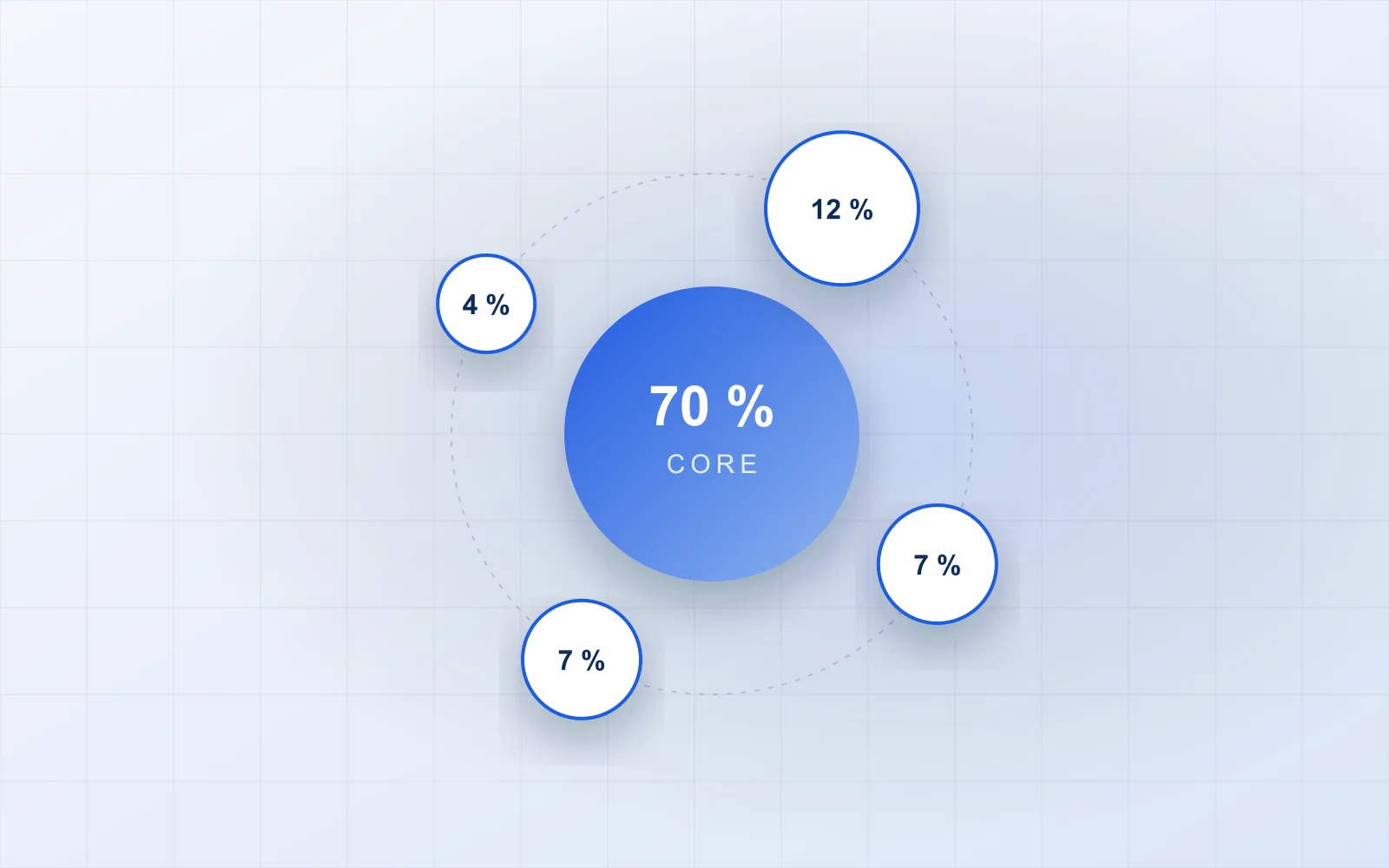
A multi-asset portfolio combines different asset classes in a single strategy. The idea is not to collect as many different investments as possible, but to put building blocks together in such a way that their characteristics complement each other. The result should be a portfolio that suits your objectives and responds in a more balanced way in different market phases than a single asset class.
The tasks of the asset classes
Each asset class has typical characteristics. In simplified terms, the following roles can be distinguished:
- Cash provides room for manoeuvre and covers foreseeable funding needs.
- Bonds provide current income and can dampen the portfolio’s fluctuations.
- Equities are considered an important driver of long-term growth, but fluctuate considerably more.
- Real estate investments provide exposure to real assets and can offer regular income.
- Precious metals and commodities can have a diversifying effect in certain phases, but generally do not generate any current income.
None of these roles is set in stone. Depending on the environment, asset classes can behave differently from what is expected. That is precisely why combining them makes sense. What matters is less how a single investment performs than what contribution it makes to the behaviour of the portfolio as a whole.
The interplay: understanding correlation
A key concept is correlation. It describes how similarly two investments develop over time. If asset classes do not move in lockstep, losses in one area can be partly offset by more stable developments in another. As a result, the overall portfolio can follow a calmer path than its individual components.
Correlations, however, are not stable. In severe crises, many investments tend to move in the same direction at the same time. A well-constructed portfolio takes this possibility into account and does not rely on a single diversification effect.
Rebalancing: back to the strategy
Markets constantly shift the weightings of a portfolio. If equities rise strongly over a long period, their share grows and the portfolio becomes riskier than originally agreed. Rebalancing means bringing the weightings back in line with the target allocation. There are various approaches to this:
- Time-based: The allocation is reviewed and adjusted at fixed intervals.
- Range-based: Action is taken as soon as an asset class moves outside a defined range.
- Combined: Regular review, but adjustments only in the event of relevant deviations.
Rebalancing has a disciplining effect: it means that investments that have performed well are partly reduced and those that have lagged behind are topped up. This often runs counter to gut feeling, but helps to keep to the agreed risk profile. Transaction costs and tax aspects must be kept in mind. Reallocating too often can be just as disadvantageous as waiting too long.
Strategy and implementation
At CAM, the strategic allocation is determined together with you. The investment committee is responsible for implementation within the agreed ranges, monitors the interplay of the asset classes and decides on adjustments. The framework is an investment horizon of, depending on the strategy, at least 7 to 10 years for equity-heavy portfolios.
If you would like to see how a multi-asset portfolio could be tailored to your situation, we would be pleased to invite you to a personal initial consultation.
Advertising. This information is provided solely for informational and advertising purposes and constitutes neither an investment recommendation nor an offer. Investments in financial instruments and crypto assets involve risks; a partial or total loss of the capital invested is possible. Past performance is not a reliable indicator of future results. For further information, please see the legal information.